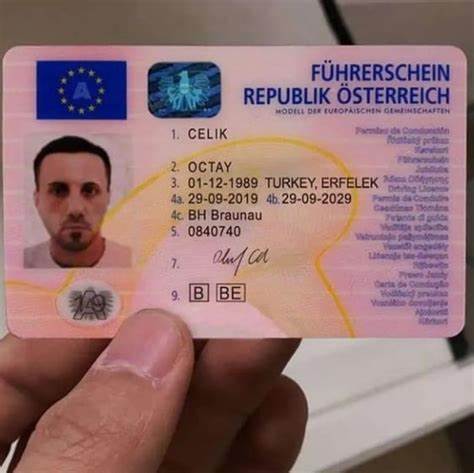
10 Eu Driver's License Purchase Experiences Tips All Experts Recommend


Navigating EU Driver's License Purchase Experiences: A Comprehensive Guide
Navigating the complexities of obtaining an EU driver's license can be a difficult task. The experiences of individuals who have actually gone through this process can differ significantly based upon several factors, such as the nation of home, the candidate's citizenship, and the particular requirements for each EU member state. This post intends to provide an informative introduction of the typical experiences associated with buying a chauffeur's license in the EU, consisting of the associated challenges, costs, and crucial considerations.
Table of Contents
- Understanding the EU Driver's License Framework
- Common Experiences When Purchasing a Driver's License
- Cost Breakdown of Obtaining a Driver's License in the EU
- Frequently Asked Questions
- Concluding Thoughts
Comprehending the EU Driver's License Framework
The European Union has established a meaningful system for motorist licensing to boost roadway security and guarantee that all chauffeurs throughout member states meet specific requirements. However, the procedures for getting a driver's license can differ from nation to country. Still, the EU instruction mandates minimum requirements, which include age limits, medical fitness, theoretical and practical tests, and paperwork.
Here's a short overview of the core elements associated with acquiring a motorist's license in the EU:
| Requirement | Description |
|---|---|
| Age Requirements | Minimum age varies, normally 18 for most vehicles |
| Medical Fitness | Compliance with defined medical standards |
| Tests | Both theoretical (written) and practical tests |
| Paperwork | Legitimate identification and residency evidence |
Typical Experiences When Purchasing a Driver's License
While the legal framework provides a structure for license acquisition, lots of candidates encounter numerous experiences along the way. Here are some of the most typical scenarios:
1. Administrative Bottlenecks
Many applicants discover themselves browsing governmental red tape. Looks at various workplaces, completing types, and dealing with fees can trigger hold-ups. Candidates often have to gather multiple files, which can consist of evidence of residency and certificates from medical exams.
2. Combination Courses and Language Barriers
Non-EU nationals may be needed to finish combination courses or language tests. This requirement can be puzzling for applicants, specifically if they are unknown with the regional language. Numerous candidates report feeling distressed about comprehending the material required for the theoretical test due to language restrictions.
3. Varying Test Standards
Not all EU nations have the exact same level of problem relating to the driving test. A candidate from a nation with more strenuous driving exam may discover it surprisingly easy in another member state. On the other hand, those coming from more lax systems might struggle.
4. Cultural Norms and Driving Behavior
Cultural distinctions can considerably impact driving behavior. New chauffeurs might discover it challenging to adjust their driving design to new traffic rules or attitudes towards road safety. For instance, some nations have stricter enforcement of speed limits while others may focus on courtesy over law.
5. Financial Implications
Acquiring a motorist's license can be expensive. Beyond the fundamental charges for tests, candidates might deal with costs for driving lessons, study products, and preparation courses. These expenses can add up quickly and end up being a concern for lots of enthusiastic motorists.
Cost Breakdown of Obtaining a Driver's License in the EU
The financial element of acquiring a motorist's license varies significantly across EU countries. Below is an illustrative contrast of the costs related to getting a motorist's license in 5 various nations:
| Country | Application Fee | Theory Test Fee | Practical Test Fee | Average Driving Lessons | Total Estimated Cost |
|---|---|---|---|---|---|
| Germany | EUR40 | EUR22 | EUR150 | EUR1,500 | EUR1,712 |
| France | EUR50 | EUR30 | EUR150 | EUR1,000 | EUR1,230 |
| Italy | EUR80 | EUR30 | EUR120 | EUR1,200 | EUR1,430 |
| Spain | EUR30 | EUR20 | EUR110 | EUR800 | EUR960 |
| Netherlands | EUR40 | EUR35 | EUR150 | EUR1,200 | EUR1,425 |
Note: Prices might differ by region and regional guidelines; constantly confirm with regional authorities.
Often Asked Questions
Q: Can I use a driver's license gotten in one EU country in another?
A: Yes, a driver's license provided in one EU member state is legitimate throughout the EU. However, local regulations on residency might use if you relocate to another country.
Q: How long is a motorist's license legitimate in the EU?
A: The validity duration for a driver's license can vary by country. In many cases, it is legitimate for 10 to 15 years, after which you will require to renew it.
Q: What should I do if my license is lost or taken?
A: In the occasion of a lost or stolen license, you need to report the loss to the local authorities and look for a duplicate through your initial issuing authority.
Q: Are there online courses available for driving tests?
A: Yes, lots of nations use online theoretical training courses. Nevertheless, Lkw Führerschein Kaufen must be completed in person.
Q: Do I require to provide evidence of residency?
A: Yes, evidence of residency is usually required when applying for a chauffeur's license in the majority of EU countries.
Concluding Thoughts
The journey to getting an EU chauffeur's license can be filled with diverse experiences formed by administrative protocols, cultural norms, and private situations. While some people might find the procedure to be uncomplicated, others may experience substantial challenges. By comprehending the typical challenges and potential costs associated with obtaining a driver's license in the EU, applicants can better prepare themselves for a smoother experience.
As the EU continues to progress and drive towards more cohesive guidelines and standards, the hope is that browsing the path to getting a motorist's license will become progressively accessible for all people and locals.